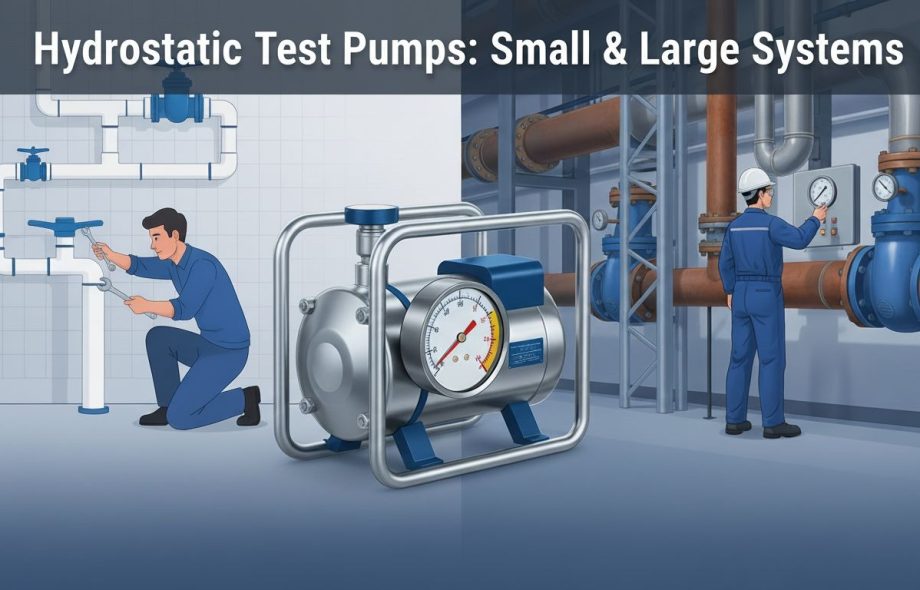
Hydrostatic test pumps play an important role in ensuring the integrity and safety of systems that rely on pressurised fluids. These test pumps are manufactured by a hydro test pump manufacturer in India for pressure testing, with a user-friendly design. The pumps are specialised tools used in hydrostatic testing, where high-pressure water is applied to a system to identify potential leaks and weaknesses.
Whether you are dealing with a large industrial pipeline or a small residential plumbing system, it is crucial to understand how to use a hydrostatic test pump for safety and accurate results.
What Are Hydrostatic Test Pumps?
These pumps, available from specialized Manual Hydro Test Pump manufacturers, are self-contained units designed to generate and maintain high pressure within a system. The hydrostatic test pump consists of a pressure gauge, a pump mechanism, a system of valves and hoses, and a reservoir. The pump moves water from the reservoir into the system being tested. It can be powered either manually by a person or by a gasoline engine. The pressure gauge helps the operator check and control the pressure being applied, making sure it meets the required testing standards.
Steps for Testing Small Systems
- The first step is to prepare the system by shutting it off. Then, drain the existing fluid from the section and connect the hydrostatic test pump to the section being tested.
- Fill the system with water, avoiding air pockets.
- Gradually pump the system up to the specified test pressure. Small systems typically require lower pressures, often 1.5 times the normal operating pressure.
- Observe all joints, fittings, and connections for leaks over a period, usually 10–30 minutes. If pressure drops, inspect for leaks and repair as needed.
Steps for Testing Large Systems
- The procedure remains the same for the larger system; it just requires more preparation.
- Often, large pipelines are tested in sections to manage pressure safely and avoid overloading the pump.
- Either pneumatic or electric pumps use proper plumbing equipment as per their ability to maintain high pressure over extended periods without manual effort.
- Slowly increase the pressure while monitoring gauges carefully.
- Large systems may require longer testing times, sometimes several hours, to ensure there are no slow leaks.
Hydrostatic test pumps are important tools for verifying system integrity across both large and small applications. Invest in a proper hydrostatic test pump from a leading manufacturer like Ambica Machine Tools. They provide a wide selection of hydrostatic test pumps to meet your unique industrial needs. Their hydro pressure test pumps are renowned for their reliability and efficiency, designed to perform under challenging conditions.
 :
https://in.pinterest.com/ambicamachine/
:
https://in.pinterest.com/ambicamachine/